Showing posts with label Vegetarian. Show all posts

Friday, March 28, 2014

Sajne Fuler Jhal / Drumstick Blossoms Curry

The spring is in full blossom all over the world. We see colors on bare trees. Red, pink, purple, white, yellow, magenta are gushing over the greenery. The breeze carries over mesmerizing fragrance from the  flowers. We see Palash, Shimul, Ashok, Bel, Jasmine, Rangan, Madhabi lata, Swarna Chanpa, Dolon Chanpa are on full swing. In the other part of the world, we see cherry blossom through Tulips, Rose, Gardenia, Hyacinthia, Lily, Water Lily, Marigold, Mums, etc. We not only take the fragrances of them but also use them in various purposes from religious to household decoration, and to even cooking.  “You can cut all the flowers but you cannot keep Spring from coming.” Spring is in our heart, spring is in our life. So let us celebrate Spring.


To keep in sync our kitchen basket also gets filled with flowers, too. Due to weather change during this season, we also tend to fall sick either by different allergies or by some virus. Our traditional cuisine entails some seasonal flowers in our cuisine. We use bak ful, kumro ful (zucchini flower), sajne ful or drumstick flower to spice up our tongue, to satiate our saliva and also to fight against the seasonal infections. Drumstick flowers are white in color with a pink tench on the bottom. They are believed to be very healthy.  Bengali families use drumstick leaves, flowers and drumsticks in daily meal. Out of all recipes of Sajne ful or drumstick flower the most popular recipe is  sajne ful er jhal or the drumstick blossom curry.

Ingredients:


1. Potato: 2 medium
2. Flat beans or Seem: 50 gms
3. Egg plant: 50 gms
4. Sajne Ful or drumstick flower: 100 gms
5. Mustard paste: 2 tablespoon
6. Green chillies: 2
7. Panch Foron: 1 teaspoon
8. Green peas: One Handful
9. Mustard oil: 1.5 tablespoon
10. Turmeric powder: 1 teaspoon
11. Salt and sugar as per taste


Steps:


1. First wash the sajne flower rigorously before use. As we collect it mostly from the ground, lot of dirt and dust come with it. Also inspect it cautiously for worms.

2. Boil the sajne ful in hot water for 5 minutes and throw away the water. Sometimes the flower is little bitter. This boil step helps to take the bitterness off the recipe.

3. Dice the potatoes. Also chop the flat beans, egg plant into small pieces. Take green peas off the pea pods. 

4.  Heat oil in a kadhai or wok.

5. Add panch foron and slit green chillies in it.

6. Add potatoes. Fry it for a while.

7. Add flat beans and then egg plant into the wok. Mix it with potato and cover. Keep the heat to medium or low.

8. After 5 minutes take the lid off and stir it again. Now add the pea pods. Mix, stir and then add turmeric powder. Add salt. Cover and let it simmer for a while.

9. At this point add the drumstick flowers. Mix and cook covered again for a while.

10. By this time all the vegetable would be soft and cooked. Mash and mix them with the flat part of the ladle.

11. Add a pinch of sugar to taste.

12. Now make a paste of mustard seeds with green chillies. Add this paste to the mix. Use your hand to sieve off the skins of mustard if, any.

13. Turn off the heat. Add 1/2 spoon of mustard oil on top.

14. Serve it hot with rice.


Enjoy!!!!!

Tuesday, November 26, 2013

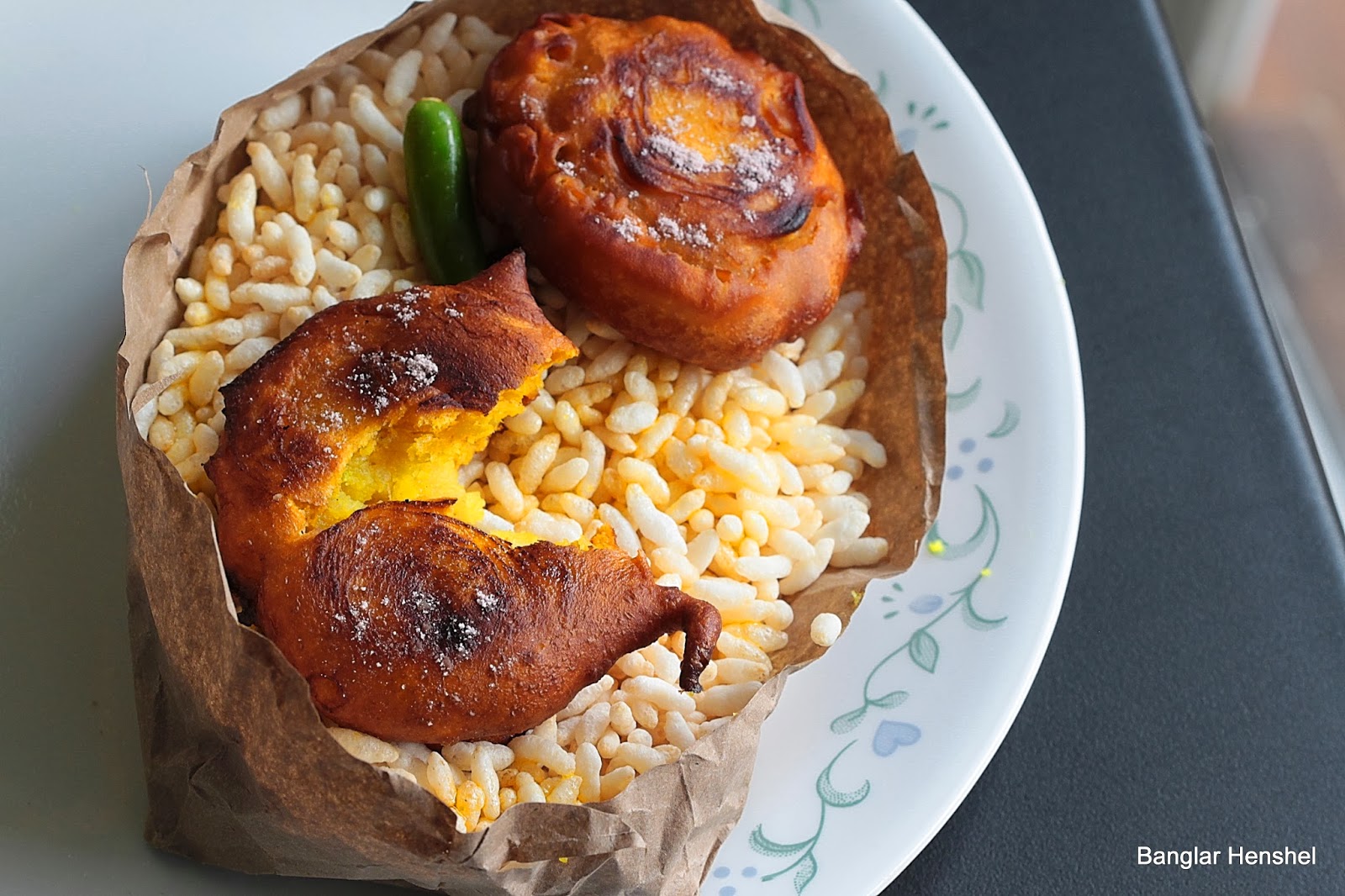
Alur Chop / Mashed Potato Fritter

"Fall is a shivering touch of cold
and cozy quilts,
Fall is the color of  orange
and red and yellow. 
Fall is the season of pumpkins 
and scarecrows.
Fall is the season of harvest and saying thanks
Autumn is Fall and Fall is autumn."

The entry of the chilling wind in northern hemisphere that gives us goosebumps and early morning shiver, makes us shuffle our closet with jackets in handy instead of light cotton clothes. Bare tress seem to wait to get covered with snow-quilt  in the ushering winter. All these change the world from the colorful days to the black and white days; make us almost concealed at home most of the time. In the chilling season we can spend our leisure while watching our favorite thriller movie or reading some novels, or we can play some indoor games with our kids at home. To go with the mood we need a good snack with a cup of hot coffee, tea or chocolate. And to serve with tea or coffee what can be better than alur chop!

I feel that all the nations in the world are more or less inclined to potato dishes despite having the health hazard associated with it. Also we can not discard carb  from our daily diet, rather we can optimize it. therefore we can treat ourselves once in a week or may be fortnight with hot singara/samosa or alur chop kind of food. This sounds like a self consolation..Isn't it!!!

As diabetes has erased potato from my daily diet, I notice that the crave for potato has increased more than before. Although I can not eat potato, my next post is dedicated to all potato lovers like me in earth. Also in this chilling cold season approaching we feel to chill out our evenings with a cup of ginger tea with sizzling snack to spice up the evening. So here I present you our favorite snack Alur chop or mashed potato fritter.


Ingredients:


1. Potato: 3 medium size
2. Asafoetida or Hing: 1/2 teaspoon
3. Ginger grated: 2 teaspoon
4. Turmeric powder: 1.5 teaspoon
5. Green chillies: 5
6. Besan or Gram flour: 2 cups
7. Corn flour: 2 Tablespoon
8. Baking soda: 1 teaspoon
9. Oil for Deep Fry
10. Black salt: 1 teaspoon
11. Onion seeds or Kalo jeere or Kalonji: 1/2 a teaspon
12.  Red chilli powder: 1 teaspoon
13. Sugar: 1/2 teaspoon


Steps:


1. Boil the potatoes with skin on. You can microwave, too, but make sure that the skin of potato does not dry up in the cooking process. If you are boiling the potatoes in water, add some salt, too. This will help to speed up the cooking and also will inject some salt inside the potatoes. 

2. Cool the boiled potatoes. Take the skin off now and then mash it nicely.

3. Meanwhile you can grate ginger and green chillies. You can use finely chopped chillies, too. I wanted to make my alur chop really spicy, therefore, added the shredded chillies for this purpose.

5. Heat 2 teaspoons of oil in a pan. Add shredded ginger followed by green chillies, asafoetida or hing,  turmeric powder and red chilli powder. When the spices are fried, add the mashed potatoes to the pan. Mix it well with the spice mixture. Add some salt for taste in the filling. Turn off the heat.

6.  Now to  make the batter mix Besan or gram flour with corn flour and baking soda. Mix it thoroughly before adding water or any other ingredients. This will help to stop forming any lumps in the batter later. In this mixture also add salt, little amount (1/2 teaspoon) of sugar, onion seeds or kalo jeere or kalonji, turmeric powder, red chilli powder and slowly add water to make a thick batter.

7. Heat oil for deep frying. Add some hot oil into the besan batter (Say 2-3 teaspoons to 1 tablespoon). This will make your chop or fritter more crispier. 

8. Now take some amount of potato mix and form a ball out of that. Then flatten the balls to make disks. I could make 8 disks. 

9. Now dip the disks into the besan batter and deep fry into hot oil. When one side browns up flip it over to fry the other side. When two sides are fried equally, take the chop/fritters out of oil and put them in a paper towel so that it absorbs excess oil from it. 

10. Fry all the disks one by one or two at once. I would suggest you to fry in small batches so that it gets cooked evenly. If you have a wide pan for deep frying, you can use bigger batches as well.

11. Alur chop is ready to serve. Before serving you can sprinkle some black salt on top. Serve it with hot tea or coffee along with puffed rice or murhi-makha.

 
   Enjoy!!!


Tuesday, October 29, 2013

Alu kabli/Alu Chat/Potato-Chickpeas Salad

As the spice adds the taste in your meal, tasty snack adds the spice to your daily life . Choice of snack everyday for me is a difficult job. Although we keep in home a lot of ready made snacks but nothing can compare with chat. The tangy and spicy taste literally waters mouth when ever we even talk about it. I make often dahi bara (lentil dumplings in yogurt sauce), papri chat, fruit chat, samosa chat, raj kachori and fuchka at home, but the easiest one is alu kabli or alu chat. This item is a healthy snack, too. This can be served as a salad item, too, in a lunch or dinner party.


Remember the tiffin time in our school days. We used to have a line of snack providers outside the school gate. Only two vendors were allowed to enter inside our school campus during the tiffin time. One was samosa seller and the other was the alu kabli seller. Though I never got a chance of buying any of those items during my school days as my parents being very strict did not hand over to us any pocket money but my friends being very generous and close to us used to share the tasty tangy alu kabli chat in a shalpata shell (one kind of container made out of shaal leaf) served with kathi/sticks. Those pieces of tangy salty and spicy potato and bites of chickpeas made our chitchat during lunch break memorable forever.  Till now everywhere in India out of all street food corners alu chat or alukabli is one of the hot selling chat item amongst all.


Ingredients


1. Boiled potato: 2 cups
2. Chickpeas: 1 cup
3. Tamarind date chutney: 1/4 cup
4. Black salt: as per taste
5. Green chillies : 3/4
6. Onion: 1 small
7. Ginger: 1 teaspoon (optional)
8. Cucumber: 2 tablespoon
9. Bhaja masla (roasted spice): 2 teaspoon
10. Lemon juice: 2 teaspoon
11. Jhuri bhaja : 2 tablespoon for garnishing


Steps:


1. Boil the potato. I boiled medium sized two potatoes. Don't over cook the potato. While boiling please add a spoon of salt into the water. This will actually help to let the salt enter inside the potato. Cool the potato before you make the alu kabli. Hot potatoes don't add the taste needed here.

2. You can soak chickpeas overnight or for 6-8 hours and boil it in water. Make sure they are soft but not mushy. This should also be cooled down completely before you make the chat. You can also use canned cooked chickpeas. You need to strain away the liquid from the chick peas, Wash it before you make the preparation.

3. To make the bhaja masla, dry roast cumin and whole red chillies. I used 2 whole red chillies and 3 teaspoons of whole cumin seeds. When you see the color of red chillies and cumin changes to darker shade and nice aroma comes out, take the pan out of heat immediately. Don't let it burn. Cool it and grind it in a mixer. I used my coffee grinder for this purpose. You can store this masala in an air tight container for future use.

4. Chop cucumber, onions, green chillies into fine/small pieces. Also finely chop ginger but this input is optional. If you do not like the taste of ginger, you can skip it. That does not differ the taste a lot.

5. You can make tamarind chutney fresh at home or you can also use regular store bought tamarind or tamarind-date chutney. I have used this time tamarind-date chutney of  Deep brand. I love this chutney. For chat preparation this ready made chutney saves a lot of time.  To make Tamarind chutney at home follow this steps:

    a. Soak 1 cup tamarind (without seeds) in two cups of warm water for half an hour.
    b. Extract pulp and strain to remove fiber.
    c. Take a heavy-bottomed pan, add the tamarind pulp and 1.5-2 cup jaggery .
    d. Cook on low heat.
    e. Add salt as per your taste.
    f. Remove from heat and allow to cool.
    g. Store in an air-tight container.

6. Now your job is to mix all the ingredients. In a bowl first add the potato, then the chickpeas or kabuli chana, then the chopped vegetables like cucumber, onions and green chilies. Add the lemon juice, black salt, and the tamarind chutney. Mix them well. Check for salt taste. Adjust as per your requirement. You might add chopped cilantro if you like. I did not add it, so I did not mention in the ingredients list.

7. Your alu kabli is ready to serve. Garnish it with some jhuri bhaja or bhujia.


Enjoy!!!!!


Thursday, October 10, 2013

Durga Shosthi Special Luchi, Chholar daal, Begun Bhaja ar Alu Chechki/Puri,Chana dal, Fried Egg Plant and Bengali Potato Curry


Durge Durge Mangalo dayini 
Mahisasur Mardini Jai ma Durge


The biggest festival of the year is here. Today is Maha Shosthi. This auspicious day marks the beginning of Durgotsav. Every Bengali household is agog with warm enthusiasm to welcome Ma. Once in an article Bir Sanghvi has penned down correctly " You can take the craze of Diwali in Delhi, Christmas in London, Summer Carnival in Rio de Janeiro, Valentine's day in Paris and then add it to the month long madness of Olympic Games or the World Cup and cram all that into a span of 5 days and you still wouldn't know what you are missing if you haven't been in Kolkata during Durga Puja". Being far away from own city, street, till I can feel the madness, craze, and passion about this particular time over there. The unique rhythm of Dhak (one special percussion instrument), fragrance of Shiuli ful, Stholo Padma (flower grown on land that looks like Lotus), kash ful, Mahisasur Mardini recital by Legend Birendra Krishna Bhadra, people around all decked up in new fashionable clothes, accessories, puja special editions of favorite magazines, special editions of music albums by favorite singers, and what not. The number of such Puja special items goes on to infinite.

On each day of Durga Puja we eat special items. That starts from Mahashosthi itself. Especially all the mothers have to perform special puja for their children. I remember my mother used to put a big tip/bindi/tilak on my forehead of yogurt and turmeric powder mixture and also tie a thread soaked into the same mixture. I am following the same tradition. Although I presumed to have a strong opposition to apply the bindi on my son's forehead,  to my astonishment I found that my son asked me to make the bindi bigger on his forehead and proudly carried the same way to school. I love this little traditional instinct in my son.
On this auspicious day we are not supposed eat any rice item and also burnt or roasted items. Also we eat only vegetarian food. And Bengali vegetarian food means the food should be cooked with no onions and garlic. So the traditional way of shosthi platter would be luchi/puri, chholar dal (chana daal/ split black gram),alu chenchki (Bengali special potato curry) and makha sandesh (Handmade cheese ball) as desert.

Luchi/Puri

Ingredients:

1. Flour/Maida: 4 cups
2. White Oil: 4 tablespoon for the dough
3. Salt: 1.5 teaspoon
4. Water: 1 and 1/4 cup
5. White oil for frying

Steps:

1. Take flour/maida in a deep bowl. Add salt and 4 tablespoons of oil and mix in together with your hand. The amount of oil in the dough is very important to make good quality luchi/puri. After a lot of experiments I have discovered that 1 cup flour : 1 tablespoon of oil makes good soft luchis. Also Bengalies make luchi only with maida, not mixed with ata (wheat flour) or only ata (wheat flour).

2. Add water slowly in the bowl and mix it well. Pour water as and when needed. Depending on the variety of flour the water amount varies. I have checked this time it took 1 and 1/4 cup of water. Knead it well untill the dough stops sticking to the wall of the bowl.


3. Heat oil in kadhai. You need to put enough oil so that you can deep fry the flattened balls.

4. Divide the dough into equal sized round balls. We call it in Bengali "lechi". With my dough I could make around 30 lechis/balls.


5. With the help of a rolling pin/belna flatten the balls into smooth round discs. Use little oil to roll it on. Many people use flour to dust the surface. I have seen my mom to use oil to flatten the balls to discs, so I have followed the same. Another reason is that the surface remains clean and mess-free with oil compared to using flour. I do not use chaki to flatten on, use counter top, only. I have flattened 5/6 lechis to discs at a time and then fried them and started to flatten the next batch. You can flatten all the balls into discs at once but make sure they do not dry up.When you are frying in large quantity, batch by batch rolling and frying can give you better result.


6.  The temperature of the oil is very essential to get white luchis. What should be the perfect temperature of oil you can understand by experience I say. I can not mention the exact temperature in degree measurement, as I do not have cooking thermometer. But one hint is that the oil should be hot enough but the smoke should not come out. Also when oil is hot, reduce the temperature to medium and then fry.


7. Put the disc into kadhai/pan from side, use a frying ladle or jhanjhri to continuously stir and press the disc from sides so that it pops up. When one side is done, turn it to the other side and fry. Take it out of the oil and serve.


Chholar Daal

Chholar daal/Chana daal is one kind of lentil/daal that we eat on special occasions mostly. In our home we used to eat chana daal on Durga Shosthi or Maha Ashtami day. Although today I did not cook it but have clicked the pictures some days back and had been thinking to post but somehow it did not materialize. But today since I made luchi, I thought of sharing with you the ideal meal that can not be fulfilled excluding chholar dal.


Ingredients:

1. Chana daal/Split Black Gram/Chholar Daal: 3  cups
2. Whole Garam Masala: 1 cinnamon stick, 4 green cardamom pods, 5/6 cloves
3. Bay leaf: 3
4.Green chilli: 2
5. Raisin: 8/10 (soaked)
6. Turmeric powder: 1 teaspoon  
7. Ginger crushed: 1 tablespoon
8. Cumin powder: 1 teaspoon (optional)
9. Asafoetidia/hing: A pinch
10. Dried Red chilli: 2
11.Shredded coconut: 2 tablespoon
12. salt as per taste
13: Sugar: 2 teaspoon (as per taste)
14. Oil/Ghee/Clarified butter:1.5 tablespoon


Steps:

1. Boil daal with approximate double amount of water with 2/3 green cardamoms, 1 bay leaf, 2 cloves, half of a cinnamon stick, 1/2 teaspoon turmeric. You may use a pressure cooker to boil it faster. I have used pressure cooker. Mostly after 10 minutes of cooking the steam would be built up and when you can hear one whistle turn the heat off. Take the pressure pin out and let the pressure slowly release the steam. By then the daal should be soft, tender yet not mushy. If you find it is not cooked properly, cook it little longer but be cautious of not over cooking it. 

2. Heat oil/ghee/clarified butter in a kadhai/pan. Add the remaining whole garam masala, bay leaf, red chillies whole in to the pan. I have cooked it with white oil and added 1 teaspoon ghee at the end.

3. When the nice aroma comes out, add freshly crushed ginger and remaining 1/2 teaspoon turmeric powder and cumin powder(optional). Fry well and add asafoetidia/hing and green chillies and also shredded coconut into the pan. Don't let the masala burn.

4. Add the boiled daal and let it simmer 3/4 minutes. Add salt and sugar at this point.  Stir to mix well.

5. Add water and also pre-soaked raisins to the pan. Mix well. Let it simmer and boil for sometimes. The daal would not be very much liquid, mostly would be thick.

6. Turn the heat off. If you have not cooked it with ghee ,at this point add the ghee and cover. Wait for 2/3 minutes and you can serve it with luchi/Puri, Pulao, Fried rice.


Alu Chenchki/Bengali Simple Potato Curry

Alu is an everyday food of all Bengali. Being diabetic, I have to discard alu now from my daily meal. But whenever if by chance I am having the taste of atleast one piece cooked potato, I feel like I am in heaven. Now I realize the need of this item more than before. When ever we cook luchi at home my hubby wants me to serve it with  his favorite alu chenchki. It is cooked with least spices and supposed to be served white in color. Although there lies little controversy in the proposed color and varies family to family.


Ingredients:

1. Potato/Alu: 3 big
2. Onion seeds/Kalonji/Kalojeere: 1.5 teaspoon
3. Asafoetidia/hing: A pinch
4.  Salt: As per taste
5. Sugar: 1 teaspoon
6. Oil: 2 tablespoon
7. Green Chillies: 4


Steps:

1. Peel and dice the potatoes into small cubes. 

2. Heat oil in a kadhai. Add the kalojeere/kalonji/onion seeds and slit green chillies in the oil. Let them sizzle and reduce the heat.

3. Add the diced potatoes, stir them well so they get coated with oil and then cover the kadhai and let the potatoes simmer.

4. Add salt, give a stir again and then cover. I try to always cover and cook. I try to use less water to make things tender unless mandatory. It helps to keep the taste of the spice and vegetable/item intact, not getting diluted with water.  

5. When the potatoes are soft, add little sugar.  To make gravy add 1/2 cup of water. Let it boil and then break the potatoes with the laddle in the kadhai. This curry will be not watery, rather dried  sabji. 

6. The color of your sabji/alu chenchki would be white. Goes very well with luchi/puri. You can also serve it with chapati/roti. If you want you can add turmeric powder but I prefer this sabji to be white only.


Begun Bhaja

Do you all remember the Dhara mustard oil advertisement long back. They used to display begun bhaja/ fried egg plant pieces that made me feel hungry instantly. Bengalies signature includes this simple item and common in every household. Although we taste it very often but we want more. "yeh dil mange more". So when I am making luchi, why should not I make my favorite begun bhaja. Yes my heart wanted it and I made it. Also my son is a fond of this item.

Ingredients

1. Egg plant: 1 big
2. Salt : 1.5 teaspoon
3. Turmeric powder 1 teaspoon
4. Sugar: 1/2 teaspoon
5. Oil for frying


Steps:

1. Cut the egg plant into thick (roughly 1/2 inches thick) round shapes. The bigger rounds can be halved.

2. Rub the pieces with salt, turmeric and sugar and set it aside for 10 minutes.

3. Heat oil in a nonstick pan and shallow fry the egg plant pieces. Egg plants absorb a lot of oil. After one side is cooked, don't add more oil. Turn the eggplants to other side. Cover the pan and cook. It will slowly release the oil it has absorbed. Check in between so that they don't get burnt. If needed add 1/2 teaspoons of oil. 

4. Switch off the heat and serve it with luchi or ruti or even rice.


Monday, August 19, 2013

Snow Peas Green Mix/ Matar shak er Chachchori

My in laws are vegetarian. And Bengali vegetarian means foods without onion and garlic. In this family even musoor daal is considered as a non vegetarian (Amish) item. Being a strict Bengali vegetarian their staple food in a daily platter is Chachchori. So after marriage, I learned to cook Chachchori to serve my hubby the platter he is grown up with. My mom used to cook it, too. But my mom-in-law is expert in applying different varieties of forons (tampering the oil with different spices) to her archaic. Thus she makes simple dishes exotic with her mastery on tampering with spices (dry seeds on the oil or foron). 


My hubby has spent his childhood in North Bengal. They had abundant supply of local greens. One of them was snow peas green (Matar shak). I have never tasted this shak ever in my life until last weekend. I have purchased it from the Korean Grocery store nearby our house. My hubby was so much exited to see this green, it came instantly to our shopping cart without any second thought. I loved watching him mesmerizing his childhood memories associated with this simple green.


 I have cooked it as per my mom-in-law's instruction.


Ingredients:


1. Snow peas Green/ Matar Shak: 1 bunch
2. White Badi (Urhat dal/ white lentils dumplings)
3. Panch Foron (panchpuran - mixture of five whole spices)
4. Egg plant big : 1/2
5. Potato: 3
6. 1 table spoon mustard seeds soaked in water and then grinded with 1 green chilli
7. Mustard  oil: 3 tablespoons
8. Green chilli: 3
9. Salt as per taste
10. Turmeric powder: 1 teaspoon
11. Sugar as per taste


Steps:

 1. Chop  potato and egg plant in the same shape and size. I have cut them thin long pieces. This is a traditional way of chopping vegetables for Chachchori. If you want you can add flat beans or Shim to this charchchori, that adds extra flavor to it. But I did not have any, so could not add it though. 

2. Finely chop the snow peas green or matar shak. You need to wash the green rigorously before you chop them.

3. Now heat mustard oil in a kadhai/pan. I took a big one so that all vegetables fit it inside.

4. Fry  the Badi/Vadis and take them off the kadhai when they turn brown from all sides.

5. Add green chilli and Panch Foron.

6. Add potatoes. Fry them nicely until they get coated with oil from all sides. 

7. Add the egg plants. Stir them.

8. Add salt and turmeric powder. Mix it thoroughly with the fried vegetables in the kadhai and cover the kadhai.

9. After 5 minutes add the snow peas green or matar shak in the kadhai gradually. There might be space crunch at this moment in the kadhai. Add shak in little batches in the kadhai instead of adding whole bunch at a time and mix it thoroughly. When it reduces in size, add the next batch, and so on.

10. Now cover the kadhai. The shak will leave lot of water and all the vegetables will be cooked in that water only. Add sugar as per taste. When the vegetables are soft and mushy, add the ground mustard seeds paste and the fried badis.


11. Mix them well, cover and let it simmer for 4/5 minutes.

12. The chachchori is ready to serve. Serve it hot with white rice.


Enjoy